
Issue, verify, and trust digital credentials.
BlockID Portal helps organizations move from fragile, over-collected identity databases to portable, verifiable, tamper-evident credentials — built on a DID-style registry and a private, hash-chained ledger.
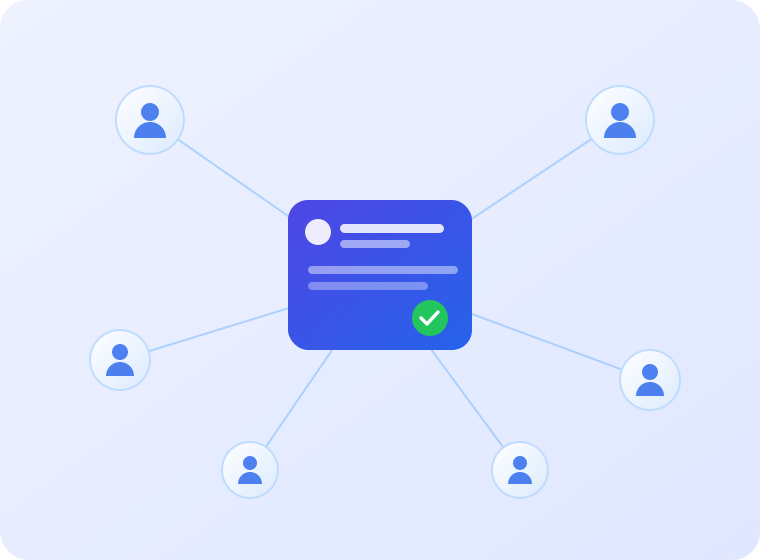
DESIGNED FOR REGULATED AND TRUST-SENSITIVE ORGANIZATIONS
Identity systems store too much, in too many places
Every copied identity record increases breach exposure. Centralized databases concentrate sensitive personal data and make verification slow and brittle.
Traditional identity records
- Sensitive personal data copied into many systems
- Each copy is a new breach target
- Verification means calling the source every time
- Tampering and stale records are hard to detect
- Revocation is slow, manual, and inconsistent
BlockID verifiable credentials
- Issue portable, cryptographically signed credentials
- Minimize unnecessary storage of sensitive identity data
- Verify authenticity locally — no call to the issuer every time
- Tampering becomes easy to detect via a hash-chained ledger
- Revoke instantly through a revocation registry
From issuance to verification in four steps
Create identities
Mint DID-style records (did:blockid:…) with cryptographic keypairs for issuers and holders.
Issue credentials
Define schemas and issue signed, hashed verifiable credentials anchored to the ledger.
Verify anywhere
Verifiers confirm signature, issuer, expiry, and revocation — without contacting you each time.
Audit & revoke
Monitor activity in audit logs, check ledger integrity, and revoke instantly when needed.
Everything you need to run verifiable identity
A complete, self-hosted platform — no cryptocurrency, no public blockchain, no third-party dependencies.
DID-style identity registry
Decentralized-identifier records with public keys, status, and lifecycle controls.
Verifiable credentials
Schema-driven, signed, hashed credentials with QR and verification tokens.
Credential wallet
Holders view, download, and present credentials with selective disclosure in mind.
Tamper-evident ledger
A private, append-only hash chain that makes tampering easy to detect.
Revocation registry
Revoke instantly with reasons; verification reflects status immediately.
Audit logs
Security and business events recorded for monitoring and review.
API endpoints
JSON endpoints for verification, status, issuance, and revocation.
Multi-tenant orgs
Isolate organizations, roles, schemas, credentials, and ledger scope.
Verifier dashboard
Verify by token, ID, or pasted JSON with a clear pass/fail breakdown.
Portable, privacy-aware, verifiable
The future of identity management is moving from centralized databases to user-controlled, verifiable credentials. Holders present proof without oversharing; verifiers trust cryptography instead of phone calls.
- Designed to reduce identity-theft risk
- Reduces breach impact through data minimization
- Supports selective disclosure and verification
- Makes tampering easier to detect
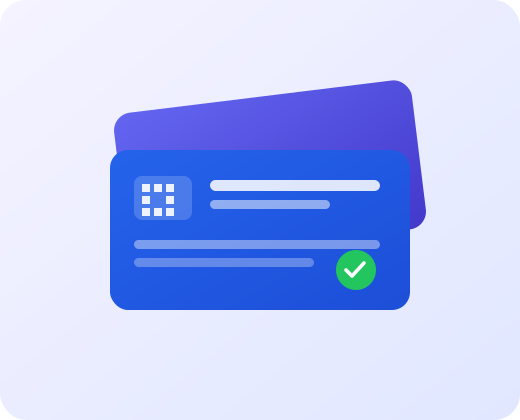
One platform, many credentials
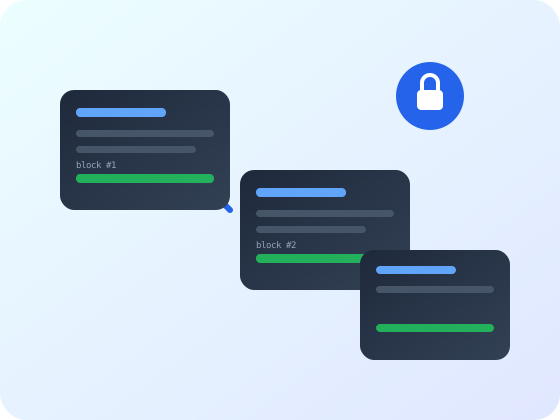
Trust you can verify, not just claim
No sensitive personal data is published to any public blockchain. The private ledger chains cryptographic hashes so unauthorized changes are detectable, and credentials are protected with digital signatures.
Hash chaining
Each block binds to the previous one.
Digital signatures
Credentials are signed and verifiable.
RBAC + isolation
Role-based access and org scoping.
Audit trails
Security events are recorded.
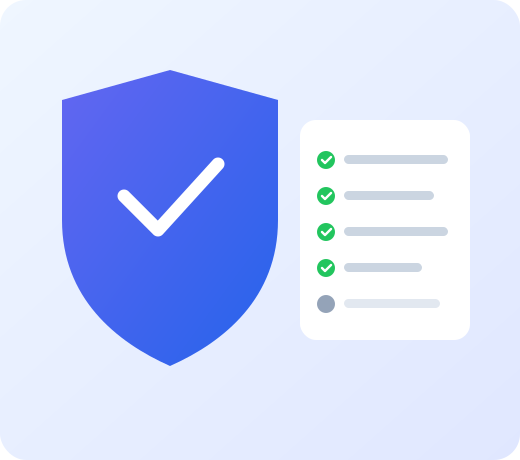
FedRAMP-aligned architecture
BlockID is designed to help organizations implement controls commonly expected in FedRAMP environments — audit logging, access control, encryption, tamper-evident logs, and data minimization. It supports FedRAMP readiness.
BlockID Portal provides a FedRAMP-aligned architecture and is designed to help organizations implement controls commonly expected in FedRAMP environments. It is not FedRAMP certified. Formal authorization requires independent assessment by authorized parties (e.g., a 3PAO) and an authorizing official.
See compliance detailsStart free. Scale when you are ready.
Starter
For small teams and pilots
- 1 organization
- Up to 500 users
- Basic credential issuance
- Credential wallet
- Public verification page
- Standard audit logs
- Email support
Professional
For growing organizations
- Up to 10 organizations
- Up to 10,000 users
- Advanced credential schemas
- Issuer and verifier roles
- Revocation registry
- Tamper-evident ledger
- API access
- Compliance reports
- Priority support
Enterprise
For regulated and large organizations
- Unlimited organizations by contract
- Custom user limits
- Advanced security review support
- FedRAMP-aligned deployment support
- Dedicated environment option
- Custom branding
- SSO-ready architecture placeholder
- Advanced audit exports
- SLA option
- Dedicated support
Built for trust-sensitive teams
Placeholder quotes — replace with approved customer testimonials before launch.
“[Placeholder] BlockID let us replace brittle ID spreadsheets with credentials our partners can verify in seconds.”
Head of Identity · Placeholder Organization
“[Placeholder] The tamper-evident ledger gave our auditors exactly the assurance they were asking for.”
Compliance Lead · Placeholder Agency
“[Placeholder] Issuing and revoking credentials is now a workflow, not a project.”
Platform Architect · Placeholder Inc.
Questions, answered
Issue your first verifiable credential today
Start a free trial in minutes, or request a guided demo with our team. No payment details required to begin.